Neferneferuaten:
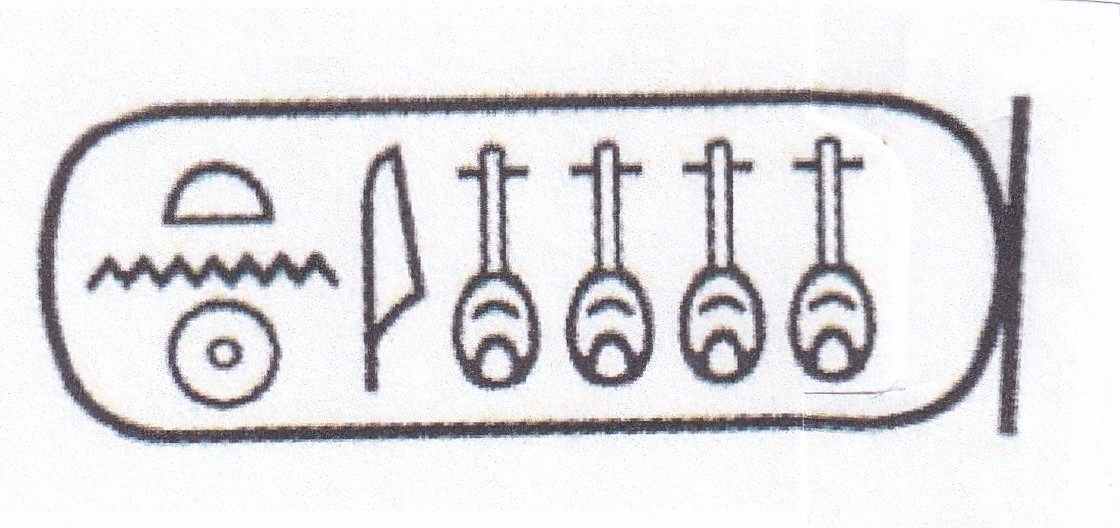
Glorious is the Splendour
of the Sun
 By Robin Gordon
 Auksford 2024
©
Copyright
Robin Gordon, 2024
PART VI:
Auksford 2024
©
Copyright
Robin Gordon, 2024
PART VI:
KHEPERKHEPERURE
 25.
Coronation
25.
Coronation
Ay did not wait for King Nebkheperure’s tomb to be
sealed. On the day the plasterers moved into the burial
chamber
with their ladders, buckets of plaster and brushes, he was at the great
temple of Amun at Waset, surrounded by his adoring courtiers.
It
was the day of his coronation.
Proceedings began with a speech in praise of the new
King.
This was read by General Nakhtmin, but it had been written by Ay
himself. As befitted the new King’s desire for
haste, he
had kept his self-eulogy short. The speeches of the two
viziers,
as ordered, were little more than brief expressions of agreement with
what Nakhtmin had said. Then the High Priest of Hor brought
forth
the White Crown of the Upper Land, Hedjet, and spoke the ritual words:
“Hail Kanakht
Tekhenkhau, Strong Bull, he of the Glittering
Crown. May you rule the land of Nekhbet, the Vulture-Goddess,
as
your predecessors have done, upholding Maat, justice, order and right,
and may Hapi grant you good inundations and prosperity,”
He placed the crown on Ay’s head, and the crowd of
courtiers cried, “Hail to His Majesty: life, prosperity,
health.”
Ay stood up with the White Crown on his head and vowed to
rule as
the Priest had said, and the crowd hailed him again.
Then Ay laid the crown aside and the High Priests of Hor,
Sobek,
Set’kh and Neith brought him the Red Crown, Deshret, hailed
him
as Sekhempehti dersetet,
Mighty of Strength, who Subdues the Asiatics,
and called on him to rule the land of Wadjet, the Cobra-Goddess of the
Delta according to the principles of order and justice symbolised by
Maat. They crowned him. The courtiers hailed him, he vowed to
rule with justice, the crowd hailed him again, and again he laid the
crown aside.
Next the First Prophet of Amun with the High Priests of Re
and
Atum brought him the Double Crown, Sekhemti, hailed him, as Heqamaat
sekhepertawy, the Ruler of Truth, who Creates the Two
Lands. They
crowned him. The crowd cried, “Hail to His Majesty:
life,
prosperity, health.” He vowed to rule the Two Lands
with
justice. The crowd hailed him again, and again he laid the
crown
aside.
The High Priest of Usír, King of the Dead, brought
forth
the Atef-Crown, with its feathers representing Maat herself and her
eternal justice and order. With this crown the new King
became
the son of Usír, the living Hor, and he received his throne
name: Kheperkheperure–Irimaat,
Everlasting are the Manifestations
of Re, The Doer of Right. Again Ay was hailed, crowned, vowed
to
rule with justice and maintain right, was hailed again, then set aside
the crown.
Immediately the High Priest of P’tah came forward,
bringing
the Blue Crown, Khepresh. Now Ay was hailed as Itinetjer Ay,
God's Father, Ay, crowned and hailed. The coronation
ceremonies
were complete. Now the new reign could be welcomed with
feasting.
By the time Horemheb arrived at Waset, believing he still had
about five days before the late King’s funeral at which he
would
perform the Opening of the Mouth for the beloved boy, the burial
chamber had been plastered and painted, and the anteroom had been
partially stocked with the generous piles of grave goods collected by
Maya, the Treasurer. Maya had not been present when one of
Ay’s men came to the new King to report that there was not
enough
room in the tomb for the chariots.
“Nnngh!
Break them up,”
said Ay.
“The little brat
isn’t going to need
them, and no-one
will
know.”
The chariots were therefore crudely broken to pieces so that
they could be piled in the antechamber.
Horemheb and his officers were rather puzzled as they passed
through the villages of Lower Kemet that the inhabitants did not come
out to welcome their new King. Those people they did see in
the
roads seemed surly and unfriendly. Horemheb sent out soldiers
to
investigate, and, from the scraps of information they picked up from
reluctant villagers, he gathered that the whole population suspected
him of having encompassed the death of the late King, and that a new
King had been crowned in his absence to prevent the accession of a
regicide. A messenger from the royal court let him know that
the
new King was Ay, that he had accepted the crown only with the greatest
reluctance, to prevent the Two Lands becoming totally ungovernable and
falling a prey to the enemies of Kemet, and that he would explain in
full when Horemheb reached Waset. In the meantime, Horemheb
was
to remember that his colleague, Ay, was also his friend and would do
all he could during his reign, which, given his age, must of necessity
be short, to prepare the people to accept Horemheb as their next King.
“What do you make of that?” said Horemheb
to General Paramessu.
“I wouldn’t trust him.”
“I don’t. The question is: do I
stay on as
Commander-in-Chief or retire quietly to my own estates?”
“Stay on!” said Paramessu. “If
you don’t,
he’ll appoint that thug Nakhtmin in your place.
Every
decent officer will resign. The army will be subject to
bullying
and incompetence. The soldiers will desert – and if
the
King of Hatti decides to invade that will be the end of the Two
Lands.”
“So if I stay on and serve that slimy hypocrite at
least I’ll be able to limit the damage?”
“You’re the only man who can.”
King Kheperkheperure was seated on a gilded throne, wearing
the
dazzling jewellery of kingship, the collar of gold and lapis lazuli,
and the beautiful Blue Crown, Khepresh. To Horemheb he looked
as
slimy and sinister as ever, but on his brow were the images of the Two
Ladies, Wadjet the Cobra and Nekhbet the Vulture, the goddesses who
watched over the Two Lands and protected them and their King from
harm. To Horemheb, even if the occupant of the throne had
obtained it by deceit the office of kingship demanded
respect. To
kill a King, even such a slimy hypocrite as Ay, was an offence against
Maat, the daughter of Re himself and the embodiment of truth, justice
and the principles of order that held the universe in balance.
He bowed to the new King and prepared to listen.
“Mmmnngh!
My dear
friend Lord Horemheb, or, I should
say, Prince
Horemheb, for, of course you are
and remain a Hereditary
Prince of
the Two Lands. Allow me, if
you will, to explain why I
was forced and
compelled despite all
my most fervent wishes against
such an action, to
assume the kingly crown, which I hope to pass on to
you at the end of
my reign, which, as
you can see from
my advanced age,
will of
necessity be fairly brief, but I hope by its end to have
stabilized the situation in
Kemet and persuaded the court and
the
people that
there could be no
truth whatsoever in
these distressing
rumours that you,
as Commander-in-Chief
and Deputy to
our beloved young
King, had somehow brought about
his death. Mnngh-mmnngh,
where
these rumours came from
I have not yet been able to discover, but you
may rest assured that
when I do I shall take
appropriate action.
“When General Nakhtmin first arrived in Waset,
bringing our
dear young
King’s body,
I called the Court and
the Priests of
Amun together to
announce the sad news and to begin preparations for
the seventy-day
purification. Almost immediately various hostile
factions
began to accuse you
of having deliberately taken the King to
war and
arranged an apparent accident.
I ordered them to be
silent and called on
General Nakhtmin to deliver his report, but, in
spite of
all he and I could say,
these same factional voices continued
to accuse you of
regicide. I was horrified when some of them
called on ME,
as the late King’s Deputy appointed to govern the
Two Lands in
the absence of the King and
his designated heir, to assume
the crown myself.
“I refused, of course, hoping to find some way to restore
order and
sanity, but the factions began
to spread their foul rumours
throughout
the scribal service, the priesthoods, and even among the
peasants.
“You will scarcely believe what
happened next.
Even
now I am hardly able to view such turpitude
and treachery
as actually
having happened in
the land of Kemet. It is like a
nightmare.
One faction, determined to prevent you from claiming
the throne, actually
wrote a letter to
the King of Hatti,
inviting him
to send one of
his sons to be
our King.
“Even worse,
they wrote this treacherous invitation as if
it had come from
Queen Ankhesenamun herself, saying that she did not
have a son
and was afraid she would be forced to marry a servant
– you, I suppose – and begging him to
rescue her.
“The poor girl was distraught.
On the one
hand, if
she were captured by
the traitors, she might be forced to marry a
Hattian
prince. On the other, if
she were caught by
one of the
other factions, she would be torn
to pieces,
such was their rage.
She begged
me to take her into
my own household to protect her, and she
begged me
to accept
the crown as the only
way to prevent civil war
– and even offered to marry me to help validate my claim.
“It seemed to me
that it was the only
possible
solution. As you can see, I am a very old man, and
my reign is
unlikely to
last more than a year,
or two at
the most. During
that time you and I
must work together
to restore stability to
the Two
Lands, so that, at
the end of it, you
can become King.
“In
the meantime, I very much hope
you will agree
to
continue to serve our beloved country as Commander in Chief of our
armed forces and
to protect us against the rising power of Hatti and
the disorder their King has sewn in
our dependencies.”
“I will serve our country and Your Gracious Majesty
to the best of my ability,” said Horemheb.
“I knew he was up to something right from the
start,”
said Maya the Treasurer. “It was pretty obvious to
anyone
who kept his eyes open that it was Ay who was determined that
Tutankhamun should go to war. When the King’s body
arrived
here it was my duty as Overseer of the Place of Eternity to ensure that
appropriate coffins were made and that enough food, drink and treasure
was collected to provide for the King in the Afterlife. His
tomb
had not progressed very far, so Ay offered his own tomb as a temporary
resting place while Tutankhamun’s tomb, near his
grandfather’s, was extended to provide a properly royal
burial. If you ask me, the boy is stuck in that little tomb
forever, and Ay will grab the royal tomb for himself.
“I discovered he had cancelled my order for the
King’s middle coffin and substituted one belonging to the man
we
just refer to as the Enemy, which probably means that the
King’s
parents and Queen Tiye are stuck in that damp hole for
eternity.”
“When I am King, said Horemheb, “I will
turf Ay out
of the royal tomb and move our beloved boy, his mother, his
grandmother, and Queen Nefertiti there.”
“It was obvious that he was trying to rush through
the
embalming procedure,” continued Maya, “but I was
sure that
the sarcophagus wouldn’t be ready before the full seventy
days
were up – but then he abandoned the carved lid and made them
use
a flat sandstone lid with a crack in it. The carpenters had
to
hack the toes off the outer coffin to get the lid to cover
it.
I’m told the shrines are back to front, with the doorway
pointing
east instead of to the Duat*1
in the West, and that the installers had
to stand on the sarcophagus and cracked the lid even more.
I’ve seen the way the chariots were broken up to get them to
fit
int the tiny space, and the way everything is packed together as if it
were just old rubbish.”
“I’ll sort it out when the time
comes,” said Horemheb.
“If your
time comes,” said Maya. You
can’t trust old Ay at all. My guess is
he’ll have you
sacked as Commander-in-Chief and appoint that thug Nakhtmin as his
heir.”
“We’ll see.”
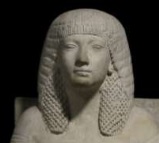
Maya
and Horemheb
Notes
*1 Duat
The Underworld
Back to text