Neferneferuaten:
Glorious is the Splendour
of the Sun
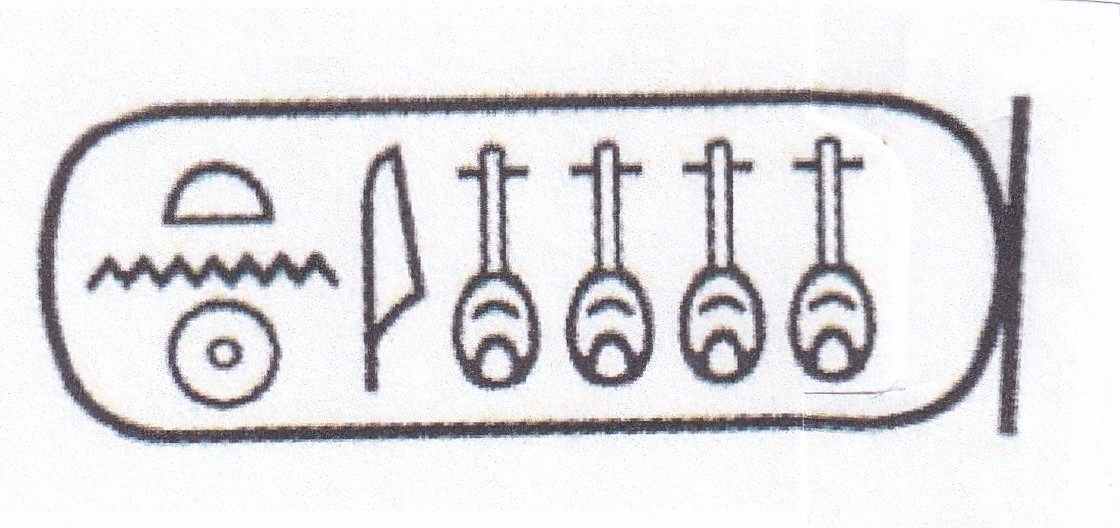
By Robin Gordon

Auksford 2024
©
Copyright
Robin Gordon, 2024
Introduction,
Part I:
Egypt
from its origins to
the
reign of Amenhotep III
1.
The history of Egypt from the origins to the Second Intermediate Period
Egypt, said Herodotus, is the gift of the Nile.
Around 6,000 BC the savannah plains of North Africa began to dry out
and become deserts. The nomadic tribes living in these
grasslands were forced to seek territory where there was a secure water
supply, and many of them found it in the valley of the Nile, in the
land we now call Egypt.
In contrast to the desert lands on either side, this place
was rich farmland, irrigated and fertilised annually by the floods
bringing rich black silt downstream and depositing it along the river
valley and in the delta, in what its inhabitants called Kemet, the
Black Land, in contrast to the Red Land, Deshret,
surrounding it.
The Black Land with its increasing population allowed settled
agriculture and the growth of civilisation, and was protected from
invasion on all sides, flanked by the eastern and western deserts, with
the sea to the north and the Nile rapids to the south. It
seems that, as the various settlements coalesced into larger units,
they formed two separate but closely related civilisations, which were
brought together in about 3,100 BC, when the King of the River Valley
conquered the Delta and united the Two
Lands into one nation.
According to Manetho, who lived in the third century BC, the
King who achieved this unification was called Men and he was the
founder of the city called by the Greeks Memphis, which became the
capital. Archaeological research suggests that Memphis
predated the unification, and, since its Egyptian name was Men-Nefer,
Eternal-Beautiful, perhaps we can take Men as a
back-formation from the
name of the new capital city, for Men-Nefer
was chosen for this role
because it is on the border between the Two Lands of Upper and Lower
Egypt.
The King who actually unified the Two Lands was King Narmer,
and he achieved it, not as the conquest of the north by an alien south
but as a true unification, taking titles of Kingship stressing his
relationship with both lands and uniting the white crown of Upper Egypt
with the Red Crown of Lower Egypt to form the Sekhemti,
“the
two powerful ones”, the double crown, called Pshent by the
Greeks, which bore the uraeus: the cobra, symbol of the Lower Egyptian
goddess Wadjet, and the vulture, symbolising Nekhbet, the tutelary
goddess of Upper Egypt.
Throughout the remainder of the history of Ancient Egypt the
Two Lands would retain their identity as partners in the Kingdom, often
with separate viziers, while the Kings would hold titles like
“He who unites the Two Lands”, and the five titles
of the names of the Kings included, as well as the Horus and Golden
Horus names, the Nebty
or “Two Ladies”
name, referring to Wadjet and Nekhbet, and the Nsw-bity or
“Sedge and Bee name” referring to the symbols of
Upper and Lower Egypt, and often translated as “King of Upper
and Lower Egypt”.
The unification of Egypt by King Narmer took place about 3100
BC. It is conventional to divide the history of the unified
country into major periods: the Old Kingdom, the First Intermediate
Period, the Middle Kingdom, the Second Intermediate Period, the New
Kingdom, the Third Intermediate Period, the Late Period, the Persian
Domination and the Ptolemaic Period. The Intermediate Periods
were times when the unity and prosperity of the country broke down and
the central government lost control. After the Late Period
Egypt was invaded by the Persians, then rescued by Alexander the Great,
who had the genius of making his conquered peoples feel that he was one
of them and their natural and rightful ruler.
The Ptolemaic period combined Greek and Egyptian cultures, so
that Egyptologists now often refer to Kings by the Greek form of their
names, e.g. Amenophis instead of Amenhotep. Even the name
“Egypt” is Greek, Aegyptos
representing the Greek
pronunciation of Hwt-Ka-Ptah,
(Mansion of the Spirit of Ptah), the name
of a temple in Men-Nefer
(Greek Memphis)
which also became one of the
names of the city.
The Old Kingdom established the power of the rulers as
god-kings, the incarnation of Horus in life and of Osiris in
death. Administration was centralised, all offices depended
on the King, and his children occupied the highest positions in the
country. On his death he was buried in a pyramid, and the
pyramids of Khufu and Khafre were and remain wonders of the
world. The King after his death joined the Sun-God Ra in his
barque, sailing with him across the sky during the day and helping to
defend him during the hours of his weak old-age, when the solar barque
made its way through the Underworld, menaced by Apep, the serpent of
chaos, until he could return in triumph to the sky. Among
humans the King was the only one assured of immortality. In
life he had protected his people. In death he continued his
protection as a god.
According to the Egyptian creation myth the Earth was covered
by the Waters of Nun or Chaos, when there arose according to one
version a small island upon which appeared the self-created god Atum,
and, according to another there arose a lotus flower from which came
the Sun-God Ra. The first god generated Shu and Tefnut, the
god and goddess of dry and moist air. Their children were Geb
and Nut, the Earth god and the sky goddess, and their children were
Osiris (Usír), Isis (Iset), Seth (Set’kh) and
Nephthys (Nebet-het). Osiris became the first ruler of Egypt,
till he was murdered by his brother Seth, who chopped up his body into
pieces which Isis then found, restored and resurrected long enough to
conceive by him a son, Horus (Hor), who grew up concealed in the
marshes till he was old enough to challenge Seth, overthrow him with
the help of his mother, and become King of Egypt, while his father,
Osiris, became King of the dead in the Underworld.
As well as being Son of Ra and destined to accompany the
Sun-God in his barque after his death, the King was also an incarnation
of Horus, and on his death became an Osiris to rule the Underworld, but
the King of the Underworld must have subjects, so it became
increasingly believed that it was not only the King who was immortal
but also his people.
On earth too the unique position of the King was gradually
eroded as the posts of provincial governor became hereditary and more
powerful, until by the end of the Old Kingdom they were almost
independent princedoms, leading to the collapse of the central
authority and the First Intermediate Period.
Reunification was achieved by the 11th Dynasty King
Mentuhotep II, who took as his Horus Name Smatowy (Unifier of
the Two
Lands). On the death of Mentuhotep IV the throne was taken by
Amenemhat I, the founder of the 12th Dynasty, who was assassinated in a
harem plot to change the succession while the crown prince was
repelling Libyans. Prince Senwosret, whose father had already
made him co-ruler to ensure the succession, returned and restored order.
In the Middle Kingdom, though the King was still divine, the
civil service was no longer a royal monopoly with the emergence of the
scribal class. The provincial governors again started
behaving like barons, so Senwosret III abolished them and divided Egypt
into three departments, Upper, Middle and Lower Egypt, each governed by
an official responsible to the vizier.
The 11th Dynasty Kings, with names like Mentuhotep,
worshipped as their principal god Montu of Waset (Thebes), but the 12
Dynasty, marking a change of ruling family, preferred Amun, who was
elevated by their success from minor provincial deity to king of the
gods, but he was a god of the living, not the dead, which confirmed
Osiris as lord of the Underworld.
Amenemhat IV died without heirs and the throne passed to
Sobekneferu, a woman, who ruled for about 4 years. On her
death it passed to Sobekhotep I, probably a member of the same family,
though counting as the first member of the 13th Dynasty. At
that time the 14th Dynasty had arisen as a separate ruling family in the
eastern Delta as the result of many years of immigration from
Syria-Palestine, which resulted in the breakdown of the Middle Kingdom
and transition into the Second Intermediate Period.
Although the foreigners were described by later Egyptians as
ruthless invaders, the truth seems to be that they were largely
peaceful settlers. There were many foreigners in
Egypt. Nubian Medjay were employed as mercenaries and police,
while Asiatics who had been captured in battle were kept as
slaves. Craftsmen from Syria-Palestine trickled in and were
welcomed, and they were joined by refugees and economic migrants until
the Asiatic population formed tribal units and eventually took over
firstly the Delta then overlordship of the whole country. The Egyptians
called the Asiatic rulers Hekau
khasut (Rulers of foreign lands) which
became in Greek Hyksos.
They were recognised as suzerains by the local native rulers
until Seqenenre-Tao, ruler of Waset (Thebes), revolted. He
was killed in battle, but his son Kamose continued the revolt, possibly
against the wishes of his courtiers who had by then achieved a modus
vivendi with the northern rulers.
Kamose however said: “I should like to know what
serves this strength of mine, when a chieftain is in Avaris, and
another in Kush, and I sit united with an Asiatic and a Nubian, each in
possession of his slice of Egypt, and I cannot pass by him as far as
Memphis... No man can settle down, when despoiled by the taxes of the
Asiatics. I will grapple with him, that I may rip open his belly! My
wish is to save Egypt and to smite the Asiatic!"
He then advanced down the Nile, easily taking
villages. If a city proved too hard to take, he advanced
beyond and took the next city and its territory, cutting off the
resisting city from the north. He extended the boundaries of
his kingdom northward and celebrated a great victory but did not have
time to capture the Hyksos capital, Avaris, or drive the Asiatics out
of Egypt before his death.
2.
The reign of Ahmose I, with
an excursus on Exodus
Kamose died after a reign of about three years and was
succeeded by his ten-year-old brother Ahmose, whose name means Child of
Yah, a lunar god. His mother Ahhotep (Yah is Content) acted
as regent and consolidated Theban control over the new
territories. She was the first of a number of powerful 18th
Dynasty queens who acted as regents for their sons.
When Ahmose assumed power he pressed north to continue
Kamose’s campaigns, conquered Hwt-wurat (Great House , i.e.
the administrative capital, called by the Greeks Avaris) and drove the
Asiatic invaders out.
It is thought that the events described in Exodus took place
during the reign of Ahmose, and fragments of a broken stela issued by
him record a series of catastrophes afflicting Egypt. The
eruption of the volcano on the island of Thera (Santorini) took place
at this time and its effects on Egypt would have been similar to the
plagues described in Exodus. Chemicals from the explosion
would have rained down on Egypt, staining the waters of the Nile red (I
will strike the water in the Nile and it will be changed into blood.
The fish will die and the river will stink, and the Egyptians will be
unable to drink water from the Nile.)
Because the river was acid the frogs fled onto dry land,
where they eventually died. (I will plague the whole of your
territory with frogs. The Nile shall
swarm with them. They shall come up from the river into your house,
into your bedroom and on to your bed, into the houses of your courtiers
and your people, into your ovens and your kneading troughs.
The frogs shall clamber over you, your people and your courtiers.)
The dead and decaying frogs were a bonanza for flies, which
laid eggs in them which hatched into maggots and fed on the
frogs. (The
LORD then told Moses to say to Aaron,
“Stretch out your staff and strike the dust on the ground,
and it will turn into maggots throughout the land of Egypt”,
and they obeyed. Aaron stretched out his staff and struck the dust, and
it turned into maggots on man and beast. All the dust turned into
maggots throughout the land of Egypt.)
Eventually the maggots turned into adult flies and swarmed
everywhere. (These
are the words of the LORD: “Let
my people go in order to worship me. If you do not let my people go, I
will send swarms of flies upon you, your courtiers, your people, and
your houses. The houses of the Egyptians shall be filled with the
swarms and so shall all the land they live in.”)
There being no more rotting frogs the swarms would eventually
have died. (“I
will let you go,” said
Pharaoh, “and you shall sacrifice to your god in the
wilderness; only do not go far. Now intercede for
me.” Moses answered, “As soon as I leave
you I will intercede with the LORD. Tomorrow the swarms will depart
from Pharaoh, his courtiers, and his people.”)
The herds would have breathed in the dust from the
eruption. This would have clogged their lungs so that they
died. As for the herds of the Israelites, possession of herds
seems to contradict the story that they were enslaved as makers of
mud-bricks. (But
once again Pharaoh became obdurate and did
not let the people go. The LORD said to Moses, “Go
into Pharaoh's presence and say to him, These are the words of the LORD
the God of the Hebrews: 'Let my people go in order to worship me.' If
you refuse to let them go and still keep your hold on them, the LORD
will strike your grazing herds, your horses and asses, your camels,
cattle, and sheep with a terrible pestilence. But the LORD will make a
distinction between Israel's herds and those of the Egyptians. Of all
that belong to Israel not a single one shall die.”)
Next came a plague of boils which may have been caused by
dust in the air, but more likely by contact with the acid
water. A medical papyrus in the British Museum prescribes an
alkaline ointment as treatment. (The LORD said to Moses and
Aaron, “Take handfuls of soot from a kiln. Moses shall toss
it into the air in Pharaoh's sight, and it will turn into a fine dust
over the whole of Egypt. All over Egypt it will become festering boils
on man and beast.”)
Sulphuric acid droplets in the upper atmosphere would have
caused the upper atmosphere to warm and the lower atmosphere to cool,
resulting in changes in airflow and catastrophic changes in
weather. Egypt’s normally dry climate could have
been subject to violent thunder and hail. (The Lord rained
down hail on the land of Egypt, hail and fiery flashes through the
hail, so heavy that there had been nothing like it in all Egypt from
the time that Egypt became a nation. Throughout Egypt the hail struck
everything in the fields, both man and beast; it beat down every
growing thing and shattered every tree.)
Similar sudden rains in a desert in West Africa some years
ago brought moisture to dormant locust eggs lying in the sand resulting
in a plague of locusts. The appearance of locusts after rain
in a normally dry area is natural. (If you refuse to let my
people go, tomorrow I will bring locusts into your country. They shall
cover the face of the land so that it cannot be seen. They shall eat up
the last remnant left you by the hail. They shall devour every tree
that grows in your countryside.)
Volcanic ash spread throughout the upper atmosphere, forming
a layer that prevented sunlight passing through to the
ground. (Moses
stretched out his hand towards the sky, and it
became pitch dark throughout the land of Egypt for three days. Men
could not see one another; for three days no one stirred from where he
was.)
The torrential rain and hail would have penetrated the
granaries, built for a dry climate, spoiling the grain and allowing the
development of ergot. What food there was would have been
shared out, but the eldest son of each family would have probably been
given priority as the family’s future depended on
him. Therefore the first-born were likely to receive more of
the poisonous grain and to die in greater numbers than other members of
the family. (Moses
then said, These are the words of the
LORD: “At midnight I will go out among the Egyptians. Every
first-born creature in the land of Egypt shall die: the first-born of
Pharaoh who sits on his throne, the first-born of the slave-girl at the
handmill, and all the first-born of the cattle. All Egypt will send up
a great cry of anguish, a cry the like of which has never been heard
before, nor ever will be again.”)
What we have in Exodus is a composite tale which became the
founding myth of the Israelite state, in which a major defeat is retold
and made into a triumph.
Yah’s Child (Ahmose) drove out the Asiatics,
including the Israelites, and the armies of Pharaoh pursued them to
make sure they did not come back. This becomes: for Yahweh,
the Child (Moses) led the Israelites out of Egypt and the armies of
Pharaoh pursued them to bring them back. This account creates
the need for some means of deliverance from the powerful Egyptian army,
hence the tale of the waters of the Red Sea being rolled back to allow
the Israelites to cross and then sweeping back to engulf
Pharaoh’s army, an incident that is nowhere mentioned in any
of the detailed records kept by the Egyptian civil service but which
provides a powerful climax to the story of the escape.
Whichever version is true, the Israelites clearly had a
strong, visionary and charismatic leader who kept them together after
they left Egypt, maintained their allegiance to the God of their
forefathers, led them to Palestine and possession of the Promised Land
and the city of Jerusalem. Perhaps it was Joshua, a name
derived from the Hebrew word for salvation, and the same name as Jesus.
3.
Amenhotep I to Thutmose IV
Ahmose was succeeded by his third son Amenhotep I after the
deaths of his two elder sons. Ahmose’s wife, Queen
Ahmose-Nefertari probably acted as regent for a few years.
Amenhotep maintained the government of Egypt and its hold on Nubia, but
did not lead campaigns into Palestine. He possibly had a son
who died young, so, being without an heir, he chose as his successor
Thutmose I, a military officer, who may have been a relation.
Thutmose had to deal with several rebellions in Nubia after
which he appointed a permanent viceroy, known as the King’s
Son of Kush, to ensure that control was maintained. Thutmose
also fought campaigns in Syria, began the major building programme at
Karnak, and established the workers’ village for the Valley
of the Kings at Deir-el-Medina. He was either the first or
second King to be buried in the Valley.
His son, Thutmose II, by a minor wife, married his
half-sister, Hatshepsut. As usual Kush revolted on the death
of the King and had to be re-pacified. Thutmose
II’s forces also fought in Sinai.
Thutmose II was succeeded by his two-year-old son, Thutmose
III, born of a secondary wife called Iset. Hatshepsut,
daughter, sister and wife of Kings, became regent and then elevated
herself to reign as joint ruler with her nephew for 22 years.
She justified her accession by announcing that Amun, King of the Gods,
had informed the other deities that he would beget on Queen Ahmose, the
wife of Thutmose I, a daughter who would rule the Two Lands.
This he did, taking the form of Thutmose, so that Hatshepsut was the
daughter of Amun.
Hatshepsut’s main achievements were the restoration
of trading arrangements that had been disrupted during the rule of the
Hyksos, (including the despatch of trading missions to Punt), and a
major building programme. When Thutmose III became sole ruler
on her death, he began a series of military campaigns to ensure that
Egypt dominated the lands of Syria-Palestine and would never again be
at risk of Asiatic invasion.
His brilliance as a military commander was immediately
evident in his first campaign. On the death of Hatshepsut,
the King of Kadesh advanced his army to Megiddo and Thutmose
immediately mustered his own army to meet the challenge. He
came to a ridge of mountains beyond which lay Megiddo. His
advisers suggested taking either the northern or the southern route
round them, but Thutmose insisted on taking a narrow pass through the
middle, a dangerous manoeuvre but one which enabled him to surprise and
defeat the King of Kadesh at the Battle of Megiddo, a battle on such a
scale that it gave its name to Armageddon, the great battle that will
be fought at the end of the world.
Thutmose III fought 17 campaigns, advanced right up to the
borders of Mitanni and left Egypt in control of the whole of
Syria-Palestine. Control was exercised through the local
kings, whose sons would be taken to Egypt for their education, so that
they would serve as hostages for their father’s good
behaviour, then, when they came to their thrones, would rule in a way
inspired by their Egyptian education.
Thutmose III’s chief queen and his heir both died,
so he was succeeded by his son by a minor wife, Amenhotep II, in whose
reign there were rebellions in Syria-Palestine, probably fostered by
Egypt’s main rival, Mitanni. Eventually however the
rising power of the Hittites prompted Mitanni to seek peace with
Egypt. The desecration and usurpation of monuments of
Hatshepsut, formerly attributed to Thutmose III were more probably the
work of Amenhotep II and prompted not so much by dislike of the female
ruler but to strengthen his own position against rival claims for the
throne.
The next King Thutmose IV may not have been Crown
Prince. He recorded on the Dream Stela, placed between the
paws of the Sphinx, that he had fallen asleep beside the Sphinx while
out hunting and that the god Re-Horakhty had sent him a dream asking
him to clear away the sand that partially buried the Sphinx and
promising him the throne. This may have been a cynical
manipulation of religion to justify his seizure of the throne from an
elder brother, if he had one, but equally it may have been a genuine
vision and one that shows that members of the Thutmosid royal family
were subject to religious experiences, according to some Egyptologists
a proof of temple-lobe epilepsy.
Thutmose IV probably reigned for about ten years and probably
had only minor uprisings to deal with. He sealed an alliance
with Mitanni under King Artatama, and eventually, after seven times of
asking, received one of Artatama’s daughters as a diplomatic
bride to seal the alliance.
4.
Amenhotep III
Amenhotep III came to the throne at the age of 12, with his
mother, Mutemwia, a minor wife of Thutmose IV, acting as
regent. He was soon married to Tiye, the daughter of Yuya and
Tjuyu, and it is therefore believed by some that Mutemwia may have been
a member of the same family, though one source suggests that she was a
Mitannian princess married to Thutmose IV to seal the peace treaty with
Mitanni. It seems equally likely that Thutmose IV’s
mother, Tiaa, might have been still alive, that she was a member of the
same family as Yuya, and that she arranged the new King’s
marriage to Tiye. There is, of course no historical
justification for this version of events, but then there does not seem
to be any real evidence that Mutemwia was a member of Yuya’s
family.
Some
Egyptologists derive possible family relationships from similarity of
names, alleging, for example, that Ay might be a brother of Queen Tiye
because of a suggested similarity of his name to that of
Tiye’s father, Yuya. The view taken in our story is
that Ay was not a relative of Yuya, and we point instead to the
similarity of the names Tiaa (the mother of Thutmose IV), Tiye (wife of
Amenhotep III) and Tey or Tiy (wife of Ay). Tiaa might
therefore have been the same sort of strong, determined woman as Tiye,
while Tey might have provided a link to Yuya’s family for Ay.
Amenhotep took as his throne name Nebmaatre (Re is Lord of
Cosmic Order and Justice).
Following the skilful administration of Thutmose IV Egypt was
recognised as the leading great power and was on friendly relations
with the other Great Kings. Amenhotep was able to continue
his father’s massive building programme, including temples at
Ipet-Sut (Karnak) and the construction of the avenue of Sphinxes
between Ipet-Sut and Southern Ipet, but he also built for other gods,
including Ptah.
He moved his capital from the traditional Men-Nefer (Memphis)
to Waset (Thebes) which was more central to the kingdom since Egypt
also included Wawat and Kush (the two regions of Nubia), where
Amenhotep and his Vizier, Merymose, had to defeat a rebellion in Year
5. Nubia was administered by a viceroy, and provided much of
the gold that Egypt could use to cement alliances with the other great
kingdoms. Residence in Waset also enabled Amenhotep to keep a
closer eye on the powerful priesthood of Amun, which by this time had
accumulated vast estates, power and influence.
In year 1 he promoted Tiye’s brother Anen to a
senior priesthood and in year 6 made him Second Prophet of Amun, which
gave him control of the economic organisation of the temples and
estates of Amun. This was possibly an even more influential
position than that of the First Prophet, at this time Ptahmose, who was
succeeded by Meryptah by year 20.
Amenhotep’s policy was to contain the power of the
priests of Amun but without antagonising them. He gave his
chief minister, Amenhotep son of Hapu, powers almost equal to his own
as intercessor with Amun, thus providing worshippers with an access to
the god. He worshipped the other traditional gods and
goddesses too, including Ptah, Sobek, Thoth, Hathor and her fierce form
Sekhmet, and he brought the Aten (the Sun-Disc) and the Sun-God Ra into
greater prominence.
References to the Aten first occur in the Middle Kingdom, and
the King is compared to the Aten from the beginning of the New
Kingdom. A stela of Amenhotep II shows the first portrayal of
the Aten as a disc with rays ending in hands holding the ankh, the
symbol of life, while Thutmose IV described himself as Lord of all that
the Aten encircles and ascribed his victories to the Aten rather than
Amun.
Amenhotep III carries this identification further, calling
himself Aten-Tjehen
(the Dazzling Aten), a name he also gave to the
royal barge and a favoured company of troops, while he called his
palace at Waset ‘Splendour of the Aten’.
In Year 10 he received as a diplomatic bride Giluḥepa the
daughter of Shuttarna, King of Mitanni, marking the friendship of the
two kingdoms.
In Year 11 he had a lake dug for Queen Tiye on her estates at
Djarrukha, possibly to emphasise that her status as Queen was not
diminished by the acquisition of a new bride, who, in any case, seems
to have disappeared so thoroughly into the royal household that the
next King of Mitanni, Tushratta, complained that no-one knew if
Giluḥepa was alive or dead. The lake would also have greatly
increased the value of Tiye’s estates by providing water for
irrigation.
Over the next years prosperity continued.
Inundations and harvests were good, which people attributed to the
divine majesty of the King, who moved between Men-Nefer and
Waset. Waset expanded as civil servants built large villas
and craftsmen and workers made their homes there. Exotic
goods flooded into the country. Chariotry, which originated
among the Indo-European peoples in the north of Syria-Palestine, was
introduced, and Yuya, the King’s father-in-law, became
commander.
Temple building continued all over the Two Lands, and
colossal statues of the King were erected.
The climax of the reign of Amenhotep III was his sed-festival
in year 30. The sed
dates back to the earliest times, when a
King who had reigned for 30 years demonstrated to his people his
fitness to continue as their ruler by running a course between
markers. The 30-year sed
marked a long reign and was then
repeated every third year. This pattern was not set in stone,
for some Kings held sed-festivals
well before reaching thirty years,
and others did not hold them at all. In the Middle Kingdom
they had become major public celebrations but by the late 18th Dynasty
they had not been held for many years.
Amenhotep III was a historian and antiquarian, restoring many
ancient monuments as well as building new temples, and, inspired by the
great feasts of the Middle Kingdom, decided to make his sed an
outstanding celebration of the greatness of Egypt, a durbar with
representatives of all the vassal kingdoms of the empire and guests
from the great kingdoms of the world. Scribes were sent to
visit ancient sites, to read the inscriptions and report on the
procedures, and the whole event was to be masterminded by Amenhotep son
of Hapu.
The celebrations were under the patronage of the goddess
Hathor, the lady of drunkenness and would have lasted for weeks, to the
great enjoyment of all classes. Gifts of all kinds were
brought to the King by his vassals and allies, and the King became a
living god, one with the dazzling Aten, the Sun itself.
In the midst of this glorious prosperity Crown Prince
Thutmose died. The exact date is not known, but it seems
likely that his death was the result of plague imported by the influx
of visitors from all over the empire and its allies in year 30, and
that the Crown Prince was probably still alive but ill during the
festivities, because his younger brother did not take the part of the
Crown Prince in the ceremonies, that part being acted by the elderly
Amenhotep, Son of Hapu, the King’s chief minister.
It seems likely that the King’s intention at this
first sed
was not only to make himself a living god, but also to take
his eldest son, Prince Thutmose, as his junior co-ruler. The
boy’s illness and subsequent death prevented this, and Prince
Amenhotep became heir to the throne.